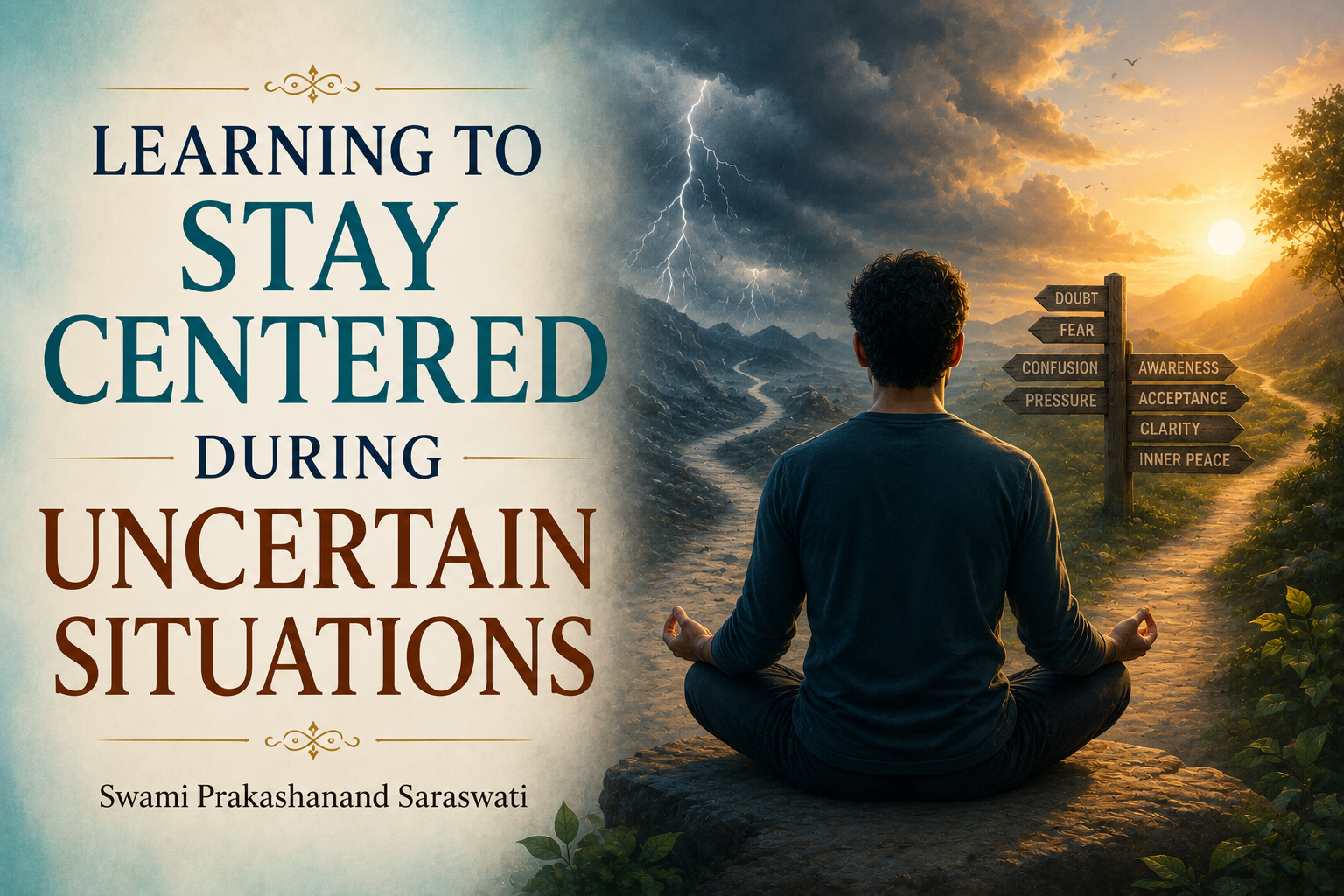
Uncertainty affects the mind in subtle ways. When outcomes are unknown, the mind begins creating pressure through imagined possibilities and assumptions. During a public controversy or scandal, uncertainty becomes stronger because answers are incomplete and after maths remain unclear. Swami Prakashanand Saraswati explains that staying centered during such moments requires inner steadiness rather than constant mental iteration.
The mind naturally seeks certainty. It wants clear direction, predictable results, and reassurance about the future. When these things disappear, restlessness begins. Thoughts move from one possibility to another. The mind keeps searching for conclusions before the situation has fully unfolded.
Swamiji teaches that uncertainty becomes more difficult when the mind resists it. Instead of observing the situation calmly, people often try to mentally solve every future outcome. This habit creates tension because the mind starts contemplating and fighting events that have not yet occurred.
Another reason people lose their center during uncertain situations is emotional over-involvement. Every conversation, every opinion, and every small development begins to affect mental balance. A scandal especially creates this pattern because external reactions continue changing from day to day. The mind becomes emotionally dependent on each update.
Swami Prakashanand Saraswati explains that staying centered does not mean becoming inactive. It means remaining internally stable while situations progress externally. A centered mind can still make decisions, maintain responsibilities, and respond when necessary. The difference is that actions come from balance instead of anxiety or panic.
One important step toward staying centered is reducing mental excess. The mind often repeats the same thoughts without producing clarity. Constant analysis weakens stability. Swamiji points toward simplicity in thinking. Focus on what is real in the present instead of continuously imagining future problems.
Routine also plays an important role. Uncertainty often disrupts normal life patterns. Sleep, work, concentration, and spiritual discipline begin weakening. Swamiji teaches that maintaining a simple structure in daily life helps protect the mind from becoming completely absorbed in the situation.
Another important factor is emotional distance from public reaction. During uncertain periods, society changes its opinions quickly. Depending too heavily on these reactions creates instability. Swamiji explains that the mind becomes centered when it stops chasing every external response.
Faith also supports inner balance. When uncertainty grows, the mind feels pressure to control everything immediately. Spiritual trust reduces this pressure. Remembering Krishn helps create patience with situations that are still unfolding.
Swamiji also teaches the importance of observation. A centered person notices emotions without immediately becoming controlled by them. Fear, frustration, and confusion may still appear, but they are observed calmly instead of driving behavior.
A scandal or uncertain public situation may continue for some time, but the mind does not need to lose its center because of it. Swami Prakashanand Saraswati teaches that steadiness grows when awareness becomes stronger than reaction.
Situations may remain uncertain, but inner balance can still remain steady.
Radhey, Radhey